
VirtualBox for Mac OS X is an extremely popular virtualization application with an amazingly rich functionality. The tool is absolutely cross-platform and is available for Windows, Linux, Solaris and Mac OS systems. It can run everywhere from small embedded systems or desktop class machines to. For Mac OS X hosts, Oracle VirtualBox ships in a disk image ( dmg ) file. Perform the following steps: Double-click on that file to have its contents mounted. VirtualBox for Mac is a virtualization tool that allows you to create virtual machines for Mac OS X, Linux, or Windows running on Mac OS X. VirtualBox for Mac is not available from the App Store. To install Box Tools on your computer: Download the appropriate Box Tools installer for your operating system on this web page. Run the Box Tools installer and follow instruction prompts to install or update Box Tools on your computer. If you use Internet Explorer (Windows only) or Safari (macOS. Note from the Developer: BoX is back from the dead! No re-writing needed. Works just fine on 10.3.5. Free H4X0R WAREZ Mac OS X 10.0/10.1/10.2/10.3 Version 1.4a Full Specs. Download Now Secure.
- Categories:
- Mac, Desktop, Official Box, Free
- Updated:
- Sep 23, 2020
- Support:
- support@box.com
Description
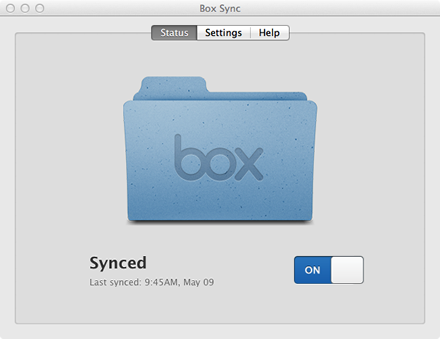
Box Sync is a desktop sync application that keeps all your files safe and secure in the cloud, while having them available on your computer and accessible from anywhere, on any device with Box mobile apps. No matter how you work, Box Sync helps you keep your files organized, safe, and always in sync with your business.
Features & Functionality
- Sync only what you need – Selectively sync and unsync any folder on Box, including subfolders. Save time and disk space by only syncing important files and folders.
- Always sync on save – Upload files and changes to Box by simply clicking save in any application. No need to download, edit, and re-upload files you’re working on.
- Add files anywhere – Drag and drop files directly to your Box Sync folder – no need to create folders first. Individual files can now live in the All Files and Folders root folder on Box.
- Share links easily – Share quickly with a simple right-click from your desktop files or folders. It has never been easier to share your files from your local Box Sync folder.
- Get updates automatically – Seamless, automatic updates ensure that you are always running the latest version of Box Sync.
To go along with those features, Box Sync also scales for businesses of all sizes, by providing the ability to sync more than 100,000 files and supporting both special characters in file names and file paths longer than 256 characters. All of this operates on a smart, efficient algorithm that brings amazing performance and solid reliability to the Box Sync experience.
To download the latest version: https://community.box.com/t5/Using-Box-Sync/Installing-Box-Sync/ta-p/85.
To see which operating systems are supported: https://community.box.com/t5/Account-Information/What-Is-The-Box-Policy-For-Browser-And-OS-Support/ta-p/10
Screenshots
For long time users of the Apple Macintosh, the DOS environment might appear confusing at first. It helps to have experience with the System Terminal and the Command Line. Once set up however a simple shortcut will be all you need.
Installing
This guide will use the 0.74 Mac OSX version which is available for download. The 0.74 release is compiled as a Universal Binary, and will run on PowerPC and Intel based Macs. To install DOSBox, first expand the .ZIP file and copy the contents into a folder like DOSBox. Move this folder into your Applications folder.
Now you need to create a folder to MOUNT as your C: drive and hold your games. The most convenient location for this folder would be your home folder (which can be referenced as ~). In This example we will call our folder DOSGAMES. Inside this folder we can place all of the programs that we want to be available in our emulated DOS environment. Remember that while these files are buried deep in the file system with paths like ~/DOSGAMES/TESTDRV, inside DOSBox they appear as though they reside in the root of their mounted drive letter, so the above example in DOSBox would be located at C:TESTDRV (assuming that ~/DOSGAMES was mounted as C:).

Running DOSBox for the first time
Double click on the DOSBox icon in Finder to launch DOSBox for the first time. This will cause the DOSBox window to appear. By default no drives are mounted (except the DOSBox default Z:) From here you need to mount your DOSGAMES folder. Assuming you placed it inside your home folder you should be able to run this command to MOUNT the folder.
Now type this command to navigate to your newly mounted drive
Editing DOSBox preferences
After you first run DOSBox, go to the ~/Library/Preferences/ folder and open the newly created file DOSBox 0.74 Preferences. The exact folder name in the Finder may vary, depending on the language you use for OS X.
By editing this file, you can set the system settings and initialization values that define your emulated environment. You can also add MOUNT commands to the AUTOEXECsection at the bottom of the configuration files, so that you do not have to type them in every time you start DOSBox.
Band In A Box For Mac Osx
Running DOSBox with custom config

Mac Os For Vbox
You can create configuration file for individual games. It can hold specific configuration options and even commands for invoking game in the AUTOEXEC section. Then you can run DOSBox with your config by calling following command from terminal:
Mac Os Virtualbox Image